07/20/2026. Remarks by
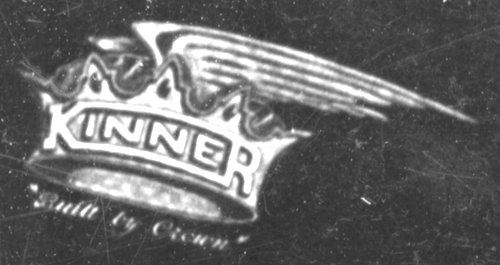
Johan Visschedijk: "The Crown Custombilt (this is not a typo, see the
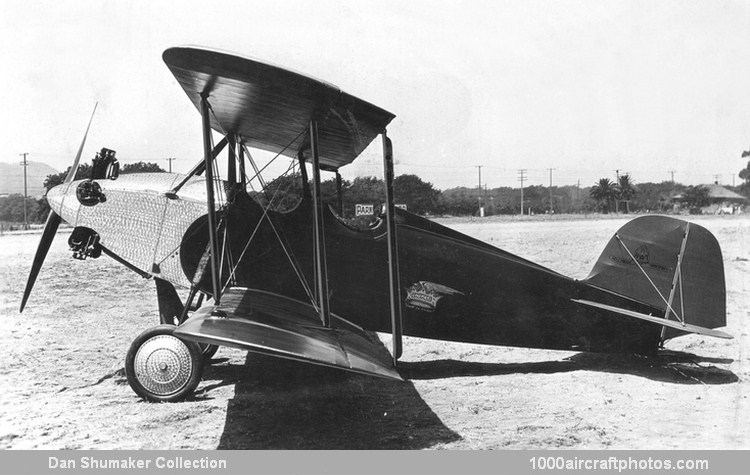
advertisement) B-3 was a two-seat open cockpit biplane seating two in tandem; a ruggedly built biplane of the sport-trainer type that was designed exclusively for use of the 90-100 hp Kinner K-5 five-cylinder air-cooled radial engine. Based on the Kinner Airster, designed by W.B. Bert Kinner a year or so earlier, the Custombilt B-3 was a modification conceived and developed by M. M. Brockway, and engineered by Earl Marsh.
The Crown Aircraft Corp. received a license from Kinner, produced aircraft carried a crown logo with the name Kinner on it, below the crown was written: "Built by Crown".
The original Kinner Airster was designed to carry three persons, but the Crown modification was specially designed as a sport-trainer and seating was limited to two. The Custombilt B-3 was first awarded a Group 2 Approval numbered 2-61 which was issued in April of 1929 for C865E (c/n 37) as a two-place aircraft, this approval was superseded by ATC 199 which was issued in August of 1929 for this and subsequent aircraft. The amount of the model B-3 that were built was low, only four aircraft were registered: NC7590 c/n 34, NC497E c/n 36, C865E c/n 37, NC12236 c/n 38.
The Crown Aircraft Corp. was incorporated as a subsidiary division of the Crown Motor Carriage Co. of Los Angeles, California. Z.S. Freeman was the president; M.M. Brockway was vice-president in charge of production and sales; Earl Marsh was the chief engineer, and Lee Brusse was the chief pilot. Manufacture of the Custombilt B-3 was carried out in a building added to the main plant building of the Crown Motor Carriage Co.; many employees of the motor carriage plant also worked in the aircraft division when certain jobs called for their skills.
The fuselage frame-work was semi-monocoque in design and was built in a composite of wood longitudinals and diagonals, with laminated wood bulkheads and formers, that were covered with plywood veneer for stiffness and then fabric covered. The front cockpit had a large door for easy entrance and exit, which other-wise would have been quite difficult. The fuel tank of 25 gal was high up in the top half of the fuselage, just ahead of the front cockpit.
The wing framework for all four panels was a composite of built-up spruce and metal spar beams, and built-up wood and metal wing ribs; the completed framework was fabric covered. The upper wing was in two panels that were joined together at the center-line and then fastened to a center-section cabane of inverted vee struts; there was no separate center-section panel as would normally be the case. There were four ailerons that were connected in pairs by a push-pull strut. The upper wings had the airfoil Clark Y, the lower had airfoil USA 27.
The fabric covered tail-group was built up of welded steel tubing and was braced externally with streamlined steel tie-rods; The fin was ground adjustable and the horizontal stabilizer was adjustable in flight. The robust landing gear of six ft tread, was of the long-leg oleo type using Gruss air-oil shock-absorber struts; wheels were 26x4, and the tail-skid was of the leaf-spring type with a removable hardened shoe. Wheel brakes, metal propeller, and engine starter were offered as optional equipment.