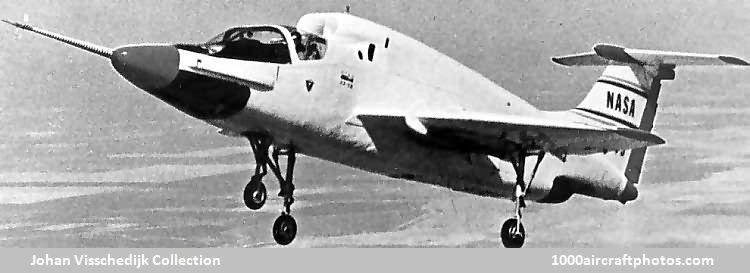
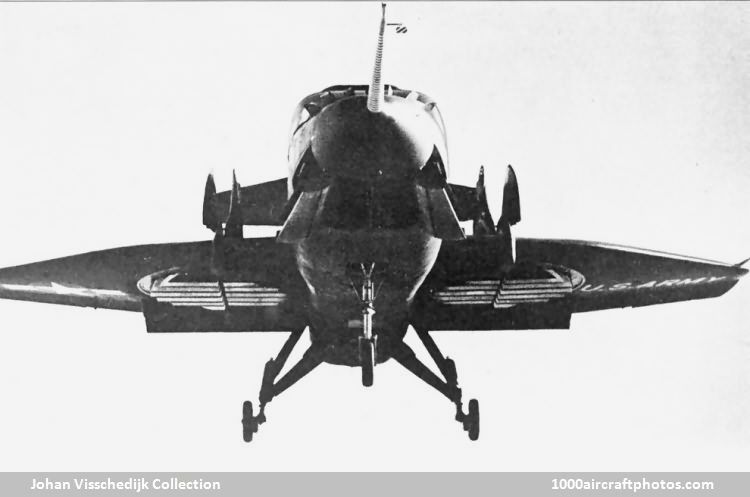
01/31/2008. The US Army ordered two of these “fan-in-wing” experimental
two-seat VTOL research aircraft (s/n 62-4505, 62-4506) in November 1961.
Initially designated VZ-11, these were redesignated XV-5A by the time
construction began in June 1962. In 1964, the first conventional flight
was made by Ron Gerdes on May 25, the first VTOL flight on July 16, and
the first transitions from vertical to forward flight and visa versa
were made on November 5.
The XV-5A had two 2,658 lb (1,206 kg) s.t General Electric J85-GE-5
turbojets mounted in a duct above the fuselage. For vertical takeoff
the engine efflux was diverted through ducts to drive a fan in each
wing and one in the nose, while thrust spoilers aft of the tailpipes
enabled the engines to be operated to full power, while the aircraft
remained stationary.
The first aircraft crashed during a public display at Edwards AFB,
California, on April 27, 1965, killing the pilot. The second crashed at
Edwards AFB on October 5, 1966, also killing its pilot. The two aircraft
accumulated 138 flying hours in 338 flights in all modes of operation.
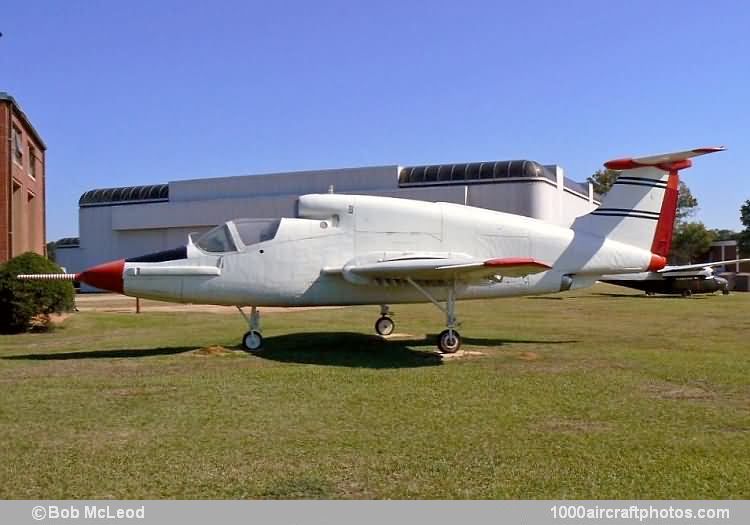
While the first aircraft was scrapped, the second was rebuilt to the
XV-5B, featuring new main landing gear, revised cockpit layout and
removal of the thrust spoiler mechanism. It was re-flown on June 24,
1968 and subsequently transferred to the NASA, registered as N705NA.
The aircraft is preserved at the US Army Aviation Museum, Fort Rucker,
Alabama.