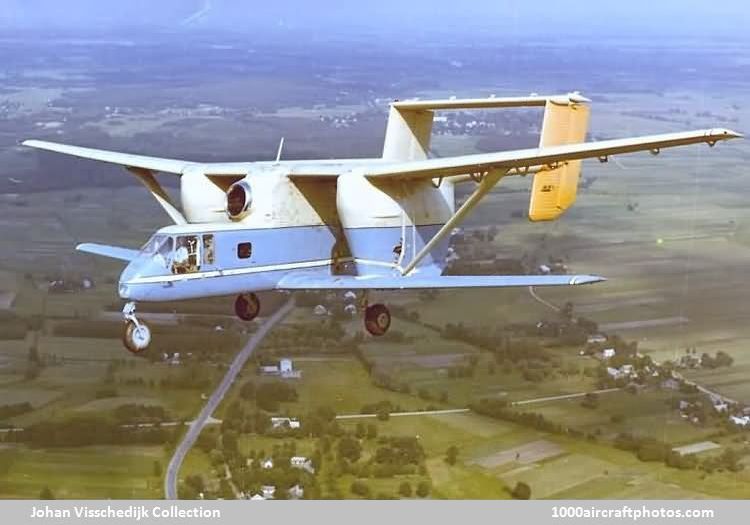
12/31/2007. Remarks by Johan Visschedijk: "The M-15 is the harmonious synthesis of great experience and innovation in aircraft design".
This statement from an 1977 PZL-Mielec leaflet is one way of describing the unique odd-looking world's first and only specially-designed jet-powered agricultural biplane. The M-15 was the result of Soviet-Polish collaboration that started in 1971 with the aim to produce an aircraft for use in the Soviet-bloc countries. The Soviets indicated a need of 3,000 aircraft.
Initial design was undertaken at PZL Mielec under Soviet chief consulting engineer R.A. Ismailov and Polish designer K. Gocila. The agricultural equipment was developed jointly by the Aeronautical Institute at Warsaw and the Soviet Research Institute of Special and Utility Aviation at Krasnodar.
The aerodynamic prototype first flew on May 20, 1973 and at the time was designated LLP-M15 (Laboratorium Latajace Prototyp, Flying Laboratory Prototype M15). The first representative M-15 flew for the first time on January 9, 1974, and on April 2, 1975, five pre-series aircraft were sent to the USSR for evaluation. On April 4, 1979 the aircraft received its full CofA, and the type was named Belphegor.
The aircraft seated a single pilot in the extreme nose of the aircraft, while two persons could be seated directly aft of the cockpit. The 'hopper-struts' could contain a total of 766 gal (2,900 l) or 4,850 lb (2,200 kg) of chemicals. The aircraft was powered by a 3,307 lb (1,500 kg) st Ivchenko AI-25 turbofan engine. After only 120 aircraft had been produced, production was stopped in 1981, ten years before the last aircraft it had supposed to replace was produced, the Antonov An-2."