09/21/2003. Remarks by
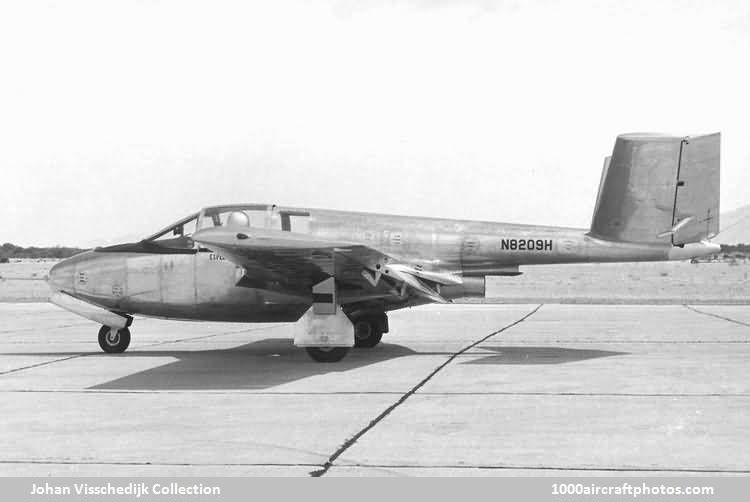
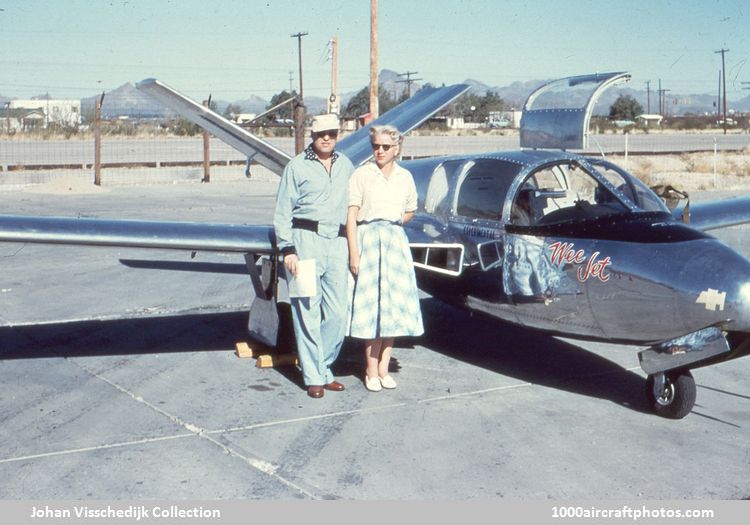
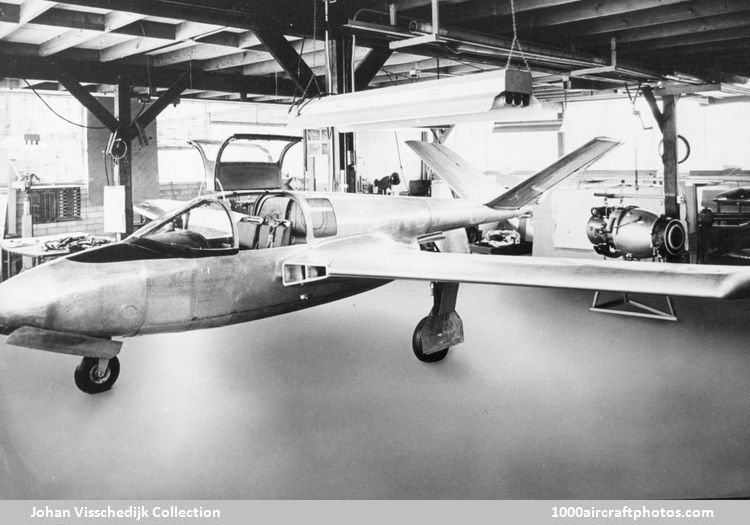
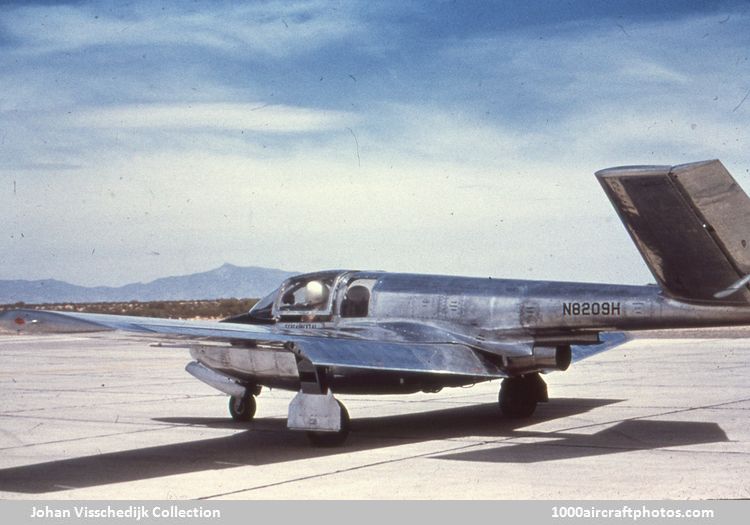
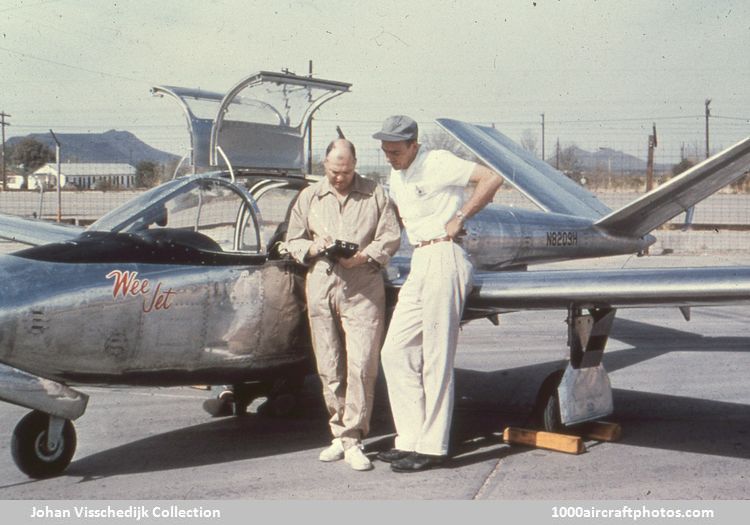
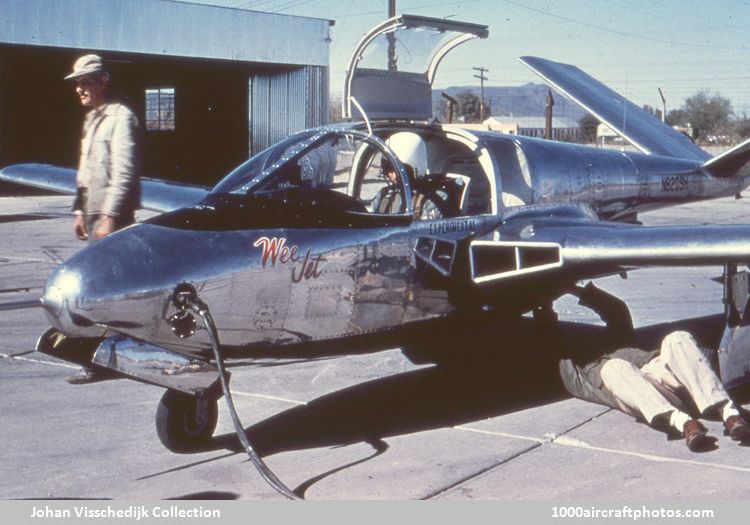
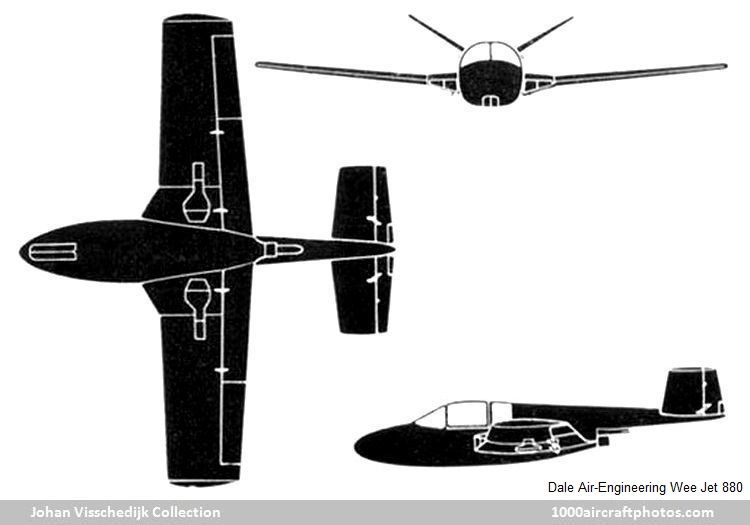
Johan Visschedijk: "In the early fifties Harold Dale played with the idea to design the ideal jet trainer: seating trainee and instructor side-by-side in front of the wing for clear visibility all around. It should have a slow landing speed and a comfortable cruising speed of 350 mph. The plane Harold had in mind was a mid-wing cantilever monoplane of aluminium alloy structure, with slotted flaps, leading edge intake ducts, semi-monocoque fuselage, upwards opening doors, butterfly tail unit and retractable tricycle landing gear.
Harold Dale was a project engineer with North American working on the F-100, so his ideal plane had to be designed in the spare time. He had assistance from his wife Eleanor who also had an engineering degree, handling much of the mathematics, administration, etc.
Construction started at Tucson in the second half of 1954 and five people worked one and a half years on it.
The prototype (N8209H) conducted its 20 minutes first flight on Good Friday March 30, 1956, with Harold Dale at the controls.
During the following weeks further test flights were made by another pilot, except for the spin tests, these were performed by USAF-pilot Doneby; the aircraft handled and performed well.
During 1956 the US Navy had become interested in jet trainers and the Wee Jet was to be in their evaluation. Therefore all data had to be available before the end of the month and the aircraft was to be flown to Patuxtent, Maryland on April 29. On April 28 1956 disaster struck: during the final spin test the pilot inadvertently activated the trim tab into full nose-down position. The pilot lost control while trying to recover and had to bail out, the aircraft crashed and burned. Later data was found thrown clear of the wreckage, showing the spin tests were a complete success.
All following data was issued on April 25, 1956 in a proposal to the US Navy for the production version. The designation was Carma WEEJET TRAINER."