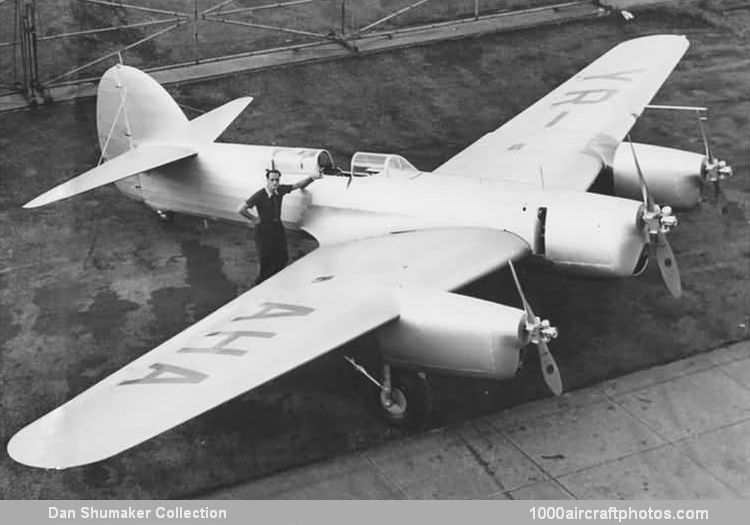
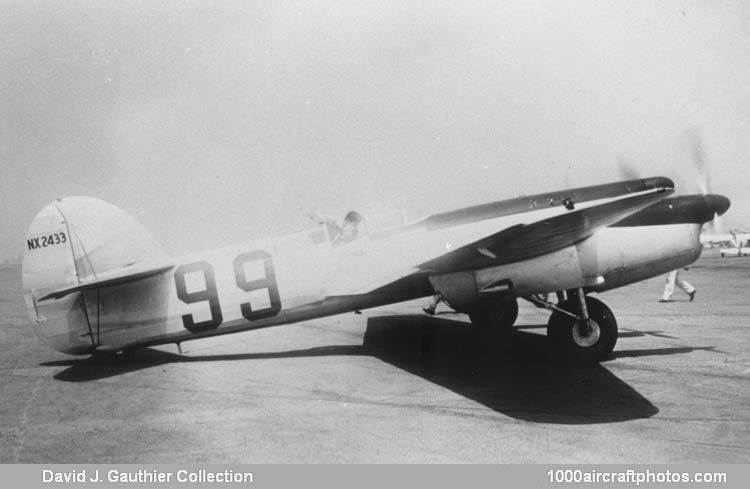
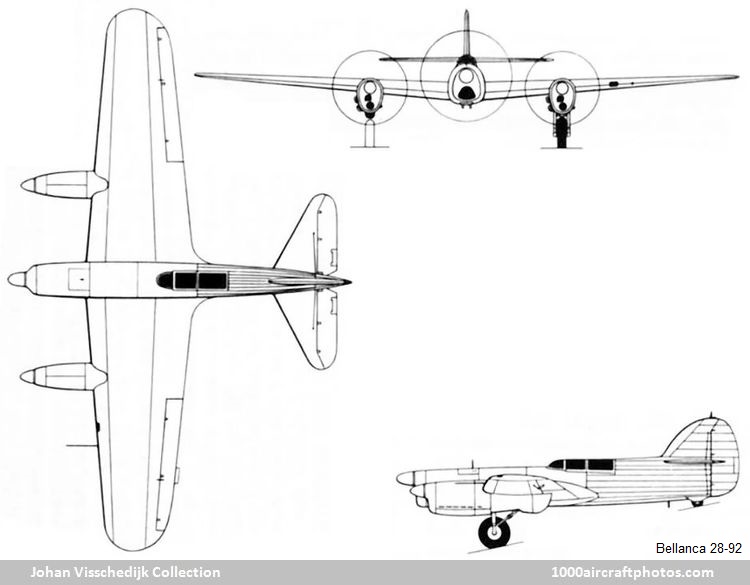
Top: Photograph from Wide World Photos, taken at Floyd Bennet Field, New York, New York, USA, September 1, 1937
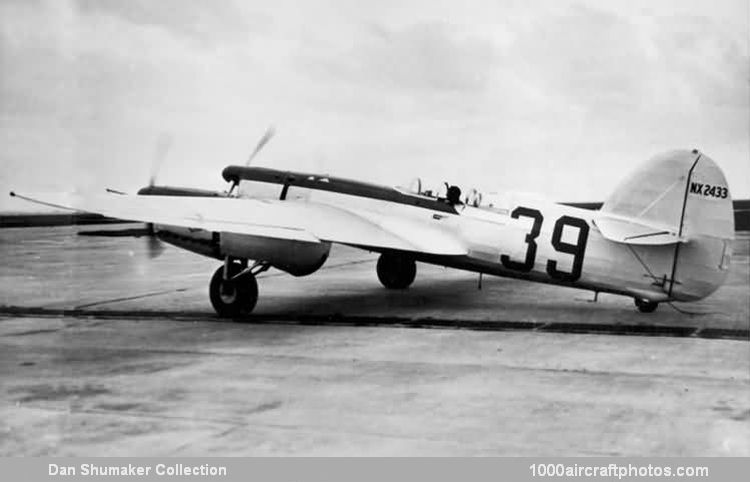
Fourth: Photograph from Wide World Photos, taken at Floyd Bennet Field, New York, New York, USA, August 30, 1939
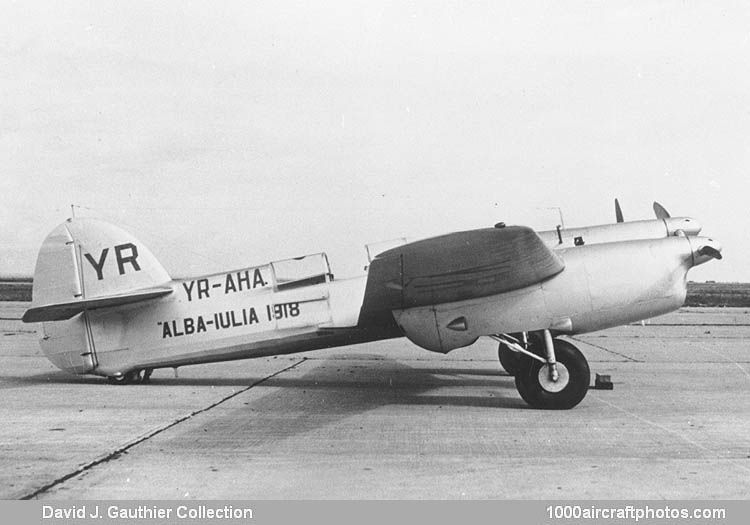
(YR-AHA) (
David Gauthier Memorial Collection)
The aircraft was registered in Rumania as YR-AHA and test flown by Papană from the Bellanca Airfield in New Castle, Delaware, USA in 1937. Alex Papană was a superb acrobatic pilot who could put his Jungmeister through any acrobatic maneuver of the day with precision. However, he did not have a history of flying fast, supercharged aircraft with controllable pitch propellers. On his first test flight from Bellanca Airfield, he over-boosted the engines and overshot the runway on landing. Fortunately, the aircraft was not damaged, except for burned-out engines.
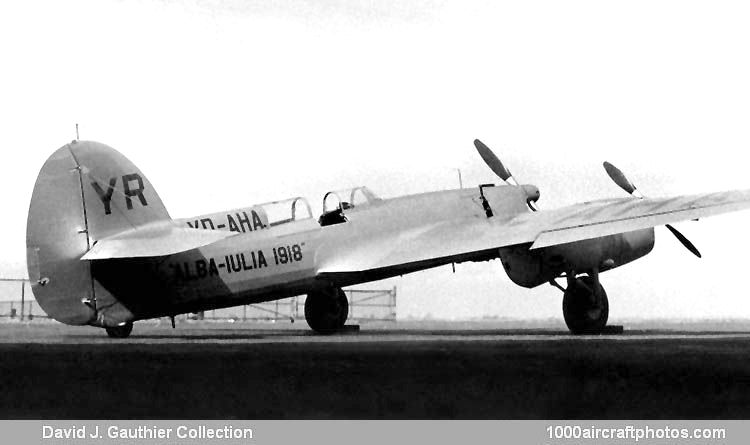
(YR-AHA) (
David Gauthier Memorial Collection)
Art Chester was flown in from the Menasco factory, and he overhauled the engines at the Bellanca factory. The incident caused a flap between Bellanca and Papană which caused the latter to cancel the order. Giuseppe Bellanca harbored deep feelings about his aircrafts. If a pilot abused a Bellanca, and Giuseppe heard about it, it was a certainty the pilot would hear from him.
(NX2433) (
David Gauthier Memorial Collection)
By 1939, the aircraft was ready for another attempt at winning the coveted Bendix cross-country event. Art Bussy piloted the Bellanca racer to a second place victory behind a new military Seversky fighter. The Seversky was the first in a series of military fighters which would evolve into the mighty P-47 Thunderbolt used in WWII. Bussy flew from Los Angeles, California to Cleveland in 8 hours and 21 minutes averaging 244.486 mph (393.4621 kmh). After refueling in Cleveland, Bussy flew on to New York, New York, to finish. Second place prize money was a mere $5,800, which barely paid the operating costs for the race.
After this historic flight, the Bellanca racer was stored in a hangar on Bellanca Airfield and never raced again. It was reported in a 1968 issue of Sport Flying that the aircraft was sold to the Argentine Government. This is the only information uncovered concerning the fate of this remarkable aircraft.