06/30/2010. Remarks by
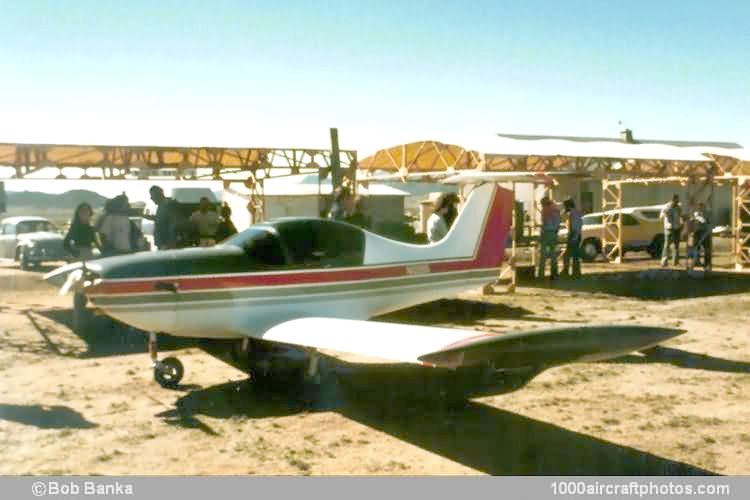
Johan Visschedijk: "Joseph P. Alvarez of Chino, California, USA, designed and built a side-by-side two-seat light aircraft, stressed for aerobatics and designed for amateur construction, known as the Polliwagen. Construction required 1,200 working hours, and the first flight was made in July 1977, registered as N176PW. Incorporating some sailplane technology, the Polliwagen had a Wortmann wing section, drooping ailerons (± 10°) and flaps that were modified to have a max deflection of 90°, and was of glass fiber composite construction.
Power was provided by a 75 hp Revmaster 2100 D Turbo (modified Volkswagen 2,100cc motorcar engine) and driving a Maloof two-blade controllable-pitch (two positions, plus feathering) propeller. Fuel capacity was 35 gal (132 l), including that carried in two 9 gal (34 l) wing tip tanks and a 2 gal (7.6 l) gravity-feed tank in the fuselage nose. A retractable tricycle-type landing gear was fitted, with the main wheels remaining semi-exposed to reduce damage in a wheels-up landing.
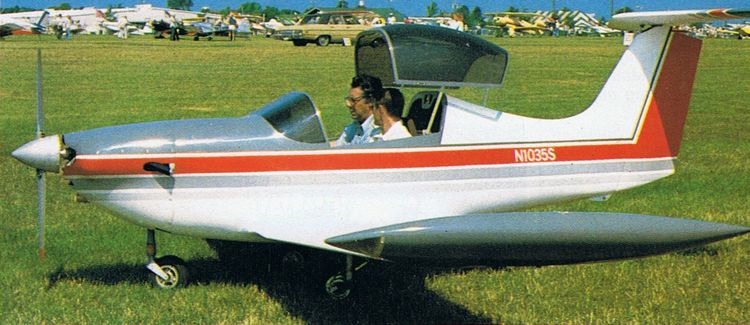
Alvarez Polliwagen (N1035S) (
Walter van Tilborg Memorial Collection)
Two years later, Alvarez and a Mr. Paul registered the second Pollwagen as N1035S on June 16, 1979. Subsequently Alvarez formed Polliwagen Inc. by at Garden Grove, California to market construction plans for amateur builders, together with a wide range of component parts, including prefabricated fuselage, elevator, spars and wing skins, cowlings, landing gear fairings, canopy and ribs, landing gear assemblies, brakes and instrument panel. N1035S was deregistered on November 28,1982.
By 1983, Polliwagen had moved to Murrieta, California and a large number sets of plans were sold, by 2010 at least 37 aircraft had been registered in the USA, although only a few are still current.
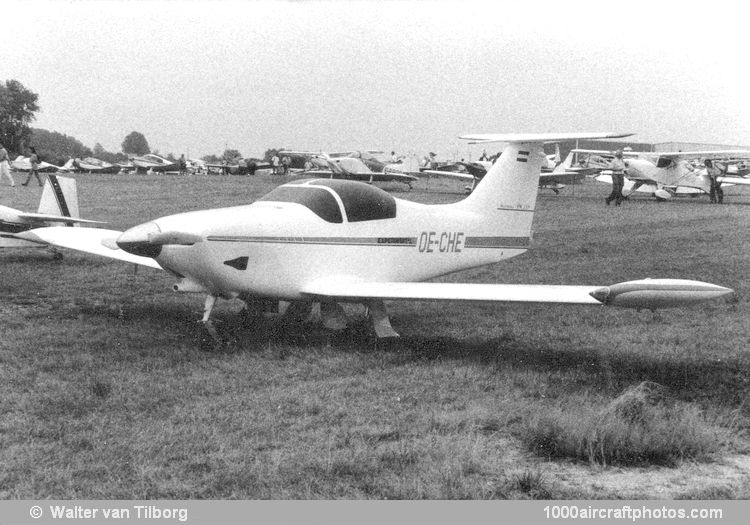
Polliwagen PW-235 Supernova (OE-CHE) (
Walter van Tilborg Memorial Collection)
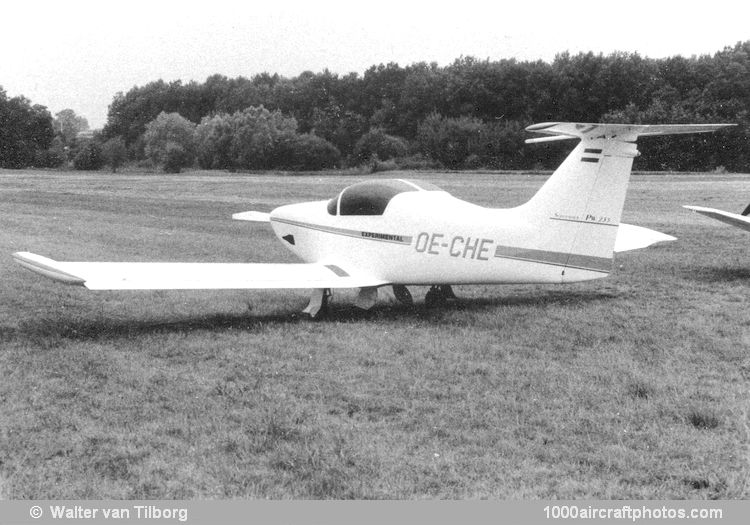
Polliwagen PW-235 Supernova (OE-CHE) (
Walter van Tilborg Memorial Collection)
A number were also registered in other countries, including Austria, Canada and Switzerland, where the type is also known as the Polliwagen PW-235 Supernova. Alternative power plants were the 100 hp Continental O-200,the 115 hp Textron Lycoming O-235, and the 150 hp Textron Lycoming O-320 engines."
The following data relate to the Alvarez Polliwagen (N1035S).